ChatGPT citations since GPT-6 started rolling out on October 7, 2026, have jumped on our 23 questions. On October 21, ChatGPT cited 9.26 websites per answer, against 4.46 before.
We ask ChatGPT, Gemini and Google's AI Overviews the same 23 questions (prompts) about every 3 days.
If a client's ChatGPT citation share fell after October 7, they may not have lost ground.
Key takeaways:
October 21 was ChatGPT's fifth check in a row far above its pre-rollout average.
From October 6 to 9, ChatGPT kept almost none of its previously cited websites.
Mark October 7 to 8 as a break in ChatGPT citation reports and compare only from October 9.
What OpenAI Announced on October 7, and What We Can Check
OpenAI's GPT-6 announcement and ChatGPT release notes, both published October 7, 2026, confirm the rollout. They also introduce Intelligent UI, where "responses can include graphics, tappable buttons, forms, charts, and interactive experiences."
Our checks around the rollout:
3.35 websites per ChatGPT answer on October 6, 7.65 on October 9.
OpenAI says GPT-6 "more reliably finds information that supports its answer." Our tracking can't verify that.
Neither October 7 post mentions GPT-6 citations or source totals.
ChatGPT Citations Since GPT-6: About 2.3x as Many Websites per Answer
From October 9 to 18, ChatGPT averaged 8.50. That's about 2.3x the 3.71 of the prior four checks.
Against all eight earlier checks it's 1.9x, as ChatGPT was already slipping from 5.22 on September 15.
The averages side by side:
Before, October 9 to 18, and October 21, on our 23 questions.
All 23 Questions We Track Went Up
On October 21, 22 of our 23 questions were above their own pre-rollout average. From October 9 to 18, all 23 averaged higher than before.
How many sources does ChatGPT cite now? The typical answer cited 8, up from 4.
Gemini, for Comparison, Stayed Flat
On October 21, Gemini's 3.48 stayed within its normal range. From October 9 to 18 it averaged 3.37, against 3.16 before.
The jump shows up in ChatGPT alone.
ChatGPT Also Swapped Out Almost All the Websites It Cited
Get Your Clients Cited Where Competitors Already Are
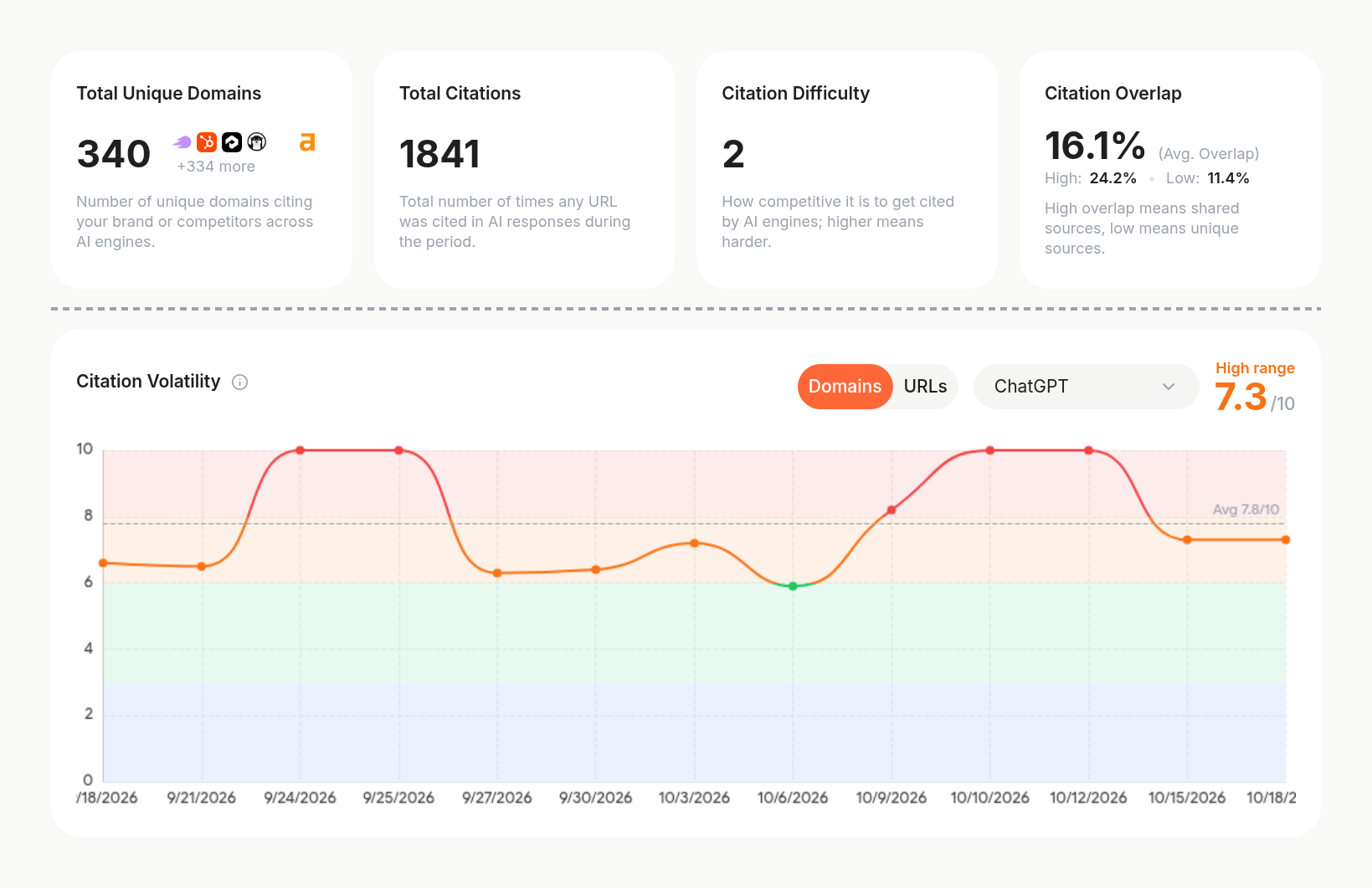
Before the rollout, two successive answers of a question shared about a quarter of their combined websites. From October 6 to 9, almost none carried over.
Since then, it's back to about a quarter. Gemini showed no break.
Websites kept between checks:
The score compares shared websites: zero means none; one means identical lists.
The number of brands mentioned barely moved: 8.46 per ChatGPT answer before, 9.12 after. About twice the sources, about the same number of brands.
Why ChatGPT Citations Since GPT-6 Likely Rose
The likely reason is the new answer format. ChatGPT answers are now about twice as long, from 3,482 to 7,039 characters on average.
On 3 questions we checked, October 6 answers had 3 blocks each. By October 12 they had 13 to 23.
The two answer shapes:
Image carousels were among the new blocks.
More blocks give each answer more places to attach a source. OpenAI hasn't said GPT-6 cites more sources, so we don't claim a cause.
(Our ChatGPT tracking didn't change between October 7 and 9.)
What It Means for You and What to Do This Week
If you track ChatGPT citations, trend lines crossing October 7 compare two kinds of answer. This week:
Mark October 7 to 8 as a break in client reports: 3.71 websites per answer before and 8.50 after aren't comparable.
Start a fresh ChatGPT comparison from October 9, and average several checks: successive answers share only about a quarter of their websites.
Track your share of all cited websites: one of 8 or 9 is a smaller slice than one of 3 or 4.
Leave Gemini comparisons alone: it held near its 3.16 average.
If you only report whether a brand is mentioned, the break is small (8.46 to 9.12 brands per answer). The same goes if your comparison starts after October 9.
How We Measured This
We track 23 questions about AEO tools, in US English, in one tracking project. "Before" is the 8 checks from September 15 to October 6 (184 answers each).
"After" averages cover October 9 to 18 (92 answers), and October 21 is reported alone.
The scope at a glance:
Get Your Clients Cited Where Competitors Already Are
We logged each different domain cited, as stored (not merging "www." versions), and skipped image links. Raw-text checks on 3 questions over 2 dates matched all 6 tallies.
We divide the websites cited in both successive answers by all the different websites cited across those answers. The score is zero when no websites overlap and one when the lists match.
We left Google AI Overviews out: our tracker missed some cited websites in recent checks. We didn't measure clicks, traffic or answer quality.
We don't know whether the level holds past October 21, or which ChatGPT plan and model our checks see.
Conclusion
ChatGPT's answers changed shape in early October, and citations moved with them.
Published 2026-10-26. We'll update this post if OpenAI documents how GPT-6 selects or shows sources, and after our next checks.
Frequently Asked Questions
What is a citation in a ChatGPT answer?
In our tracking, a citation is a website the answer links to as a source, logged once per answer.
Does the GPT-6 change affect ChatGPT Work or Codex?
OpenAI says the models powering Work and Codex are not changing as part of this release.
Should you rewrite content because ChatGPT cites more websites?
Our data doesn't point that way. The rise hit all 23 questions at once, which looks like a change in how ChatGPT answers.
Will ChatGPT change how it shows sources again?
Possibly. OpenAI says "there's still work ahead to improve the model's design judgment and expand what it can create."
How often should you check ChatGPT citations after a model update?
On a fixed schedule. We check about every 3 days; the jump showed on the first check after the rollout.
NOTE:
This article was written by SurgeGraph's AI writer using a custom Author Synthesis voice profile, then reviewed by a human editor. Author Synthesis learns a brand's voice from real writing samples so generated content matches its tone, cadence, and phrasing.
Eli Taylor
Digital Marketer at SurgeGraph
Eli lives and breathes digital marketing and AI. He always seeks new ways to combine AI with marketing strategies for more effective and efficient campaign executions. When he’s not tinkering with AI tools, Eli spends his free time playing games on his computer.