The new AI training opt-out in robots.txt is one shared group: User-Agent: __usage_ai-training followed by Disallow: /.
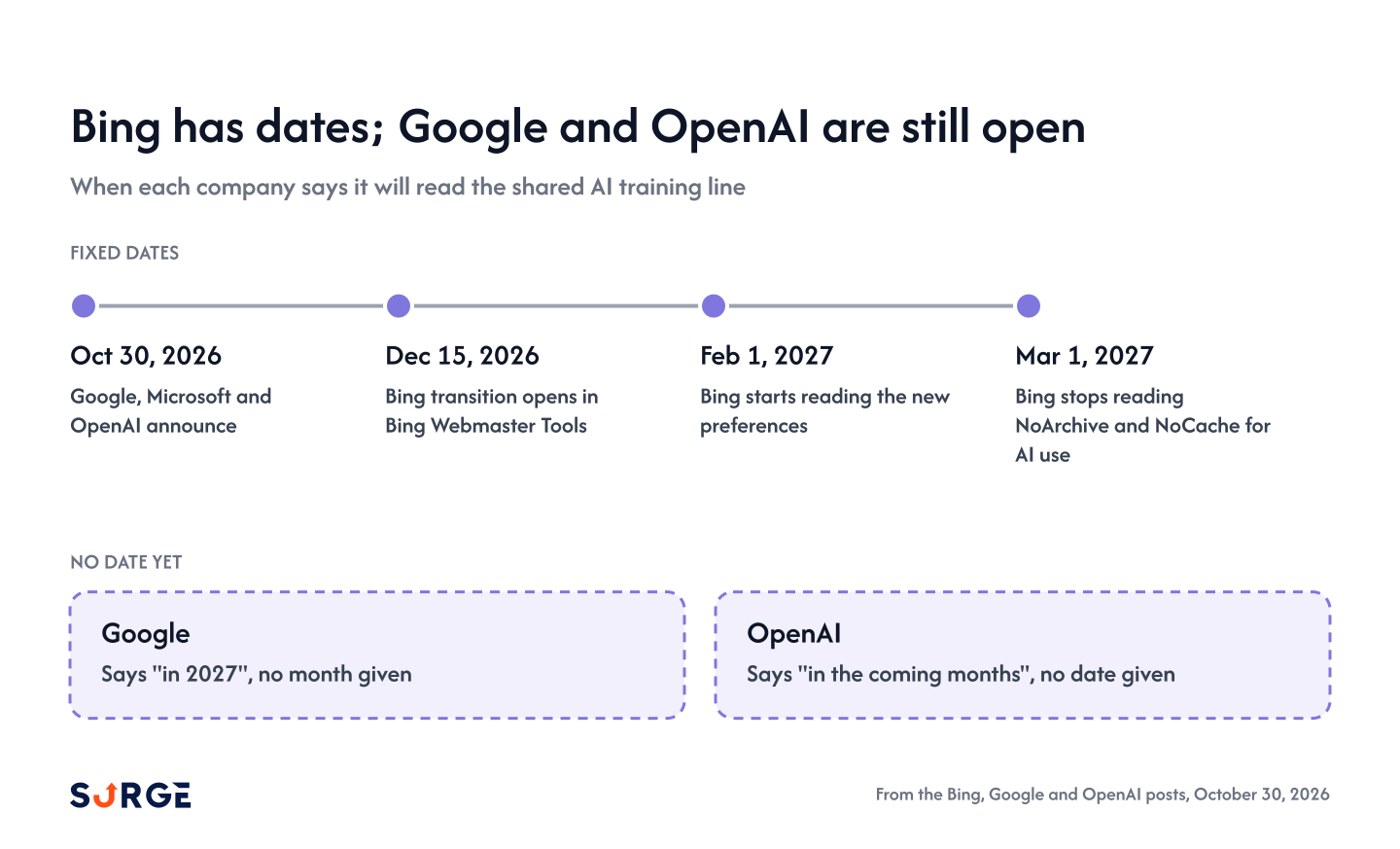
Google, Microsoft (Bing) and OpenAI each said on October 30, 2026 that they will read it. Bing starts on February 1, 2027, Google aims to support it in 2027 and OpenAI says "in the coming months."
Key takeaways:
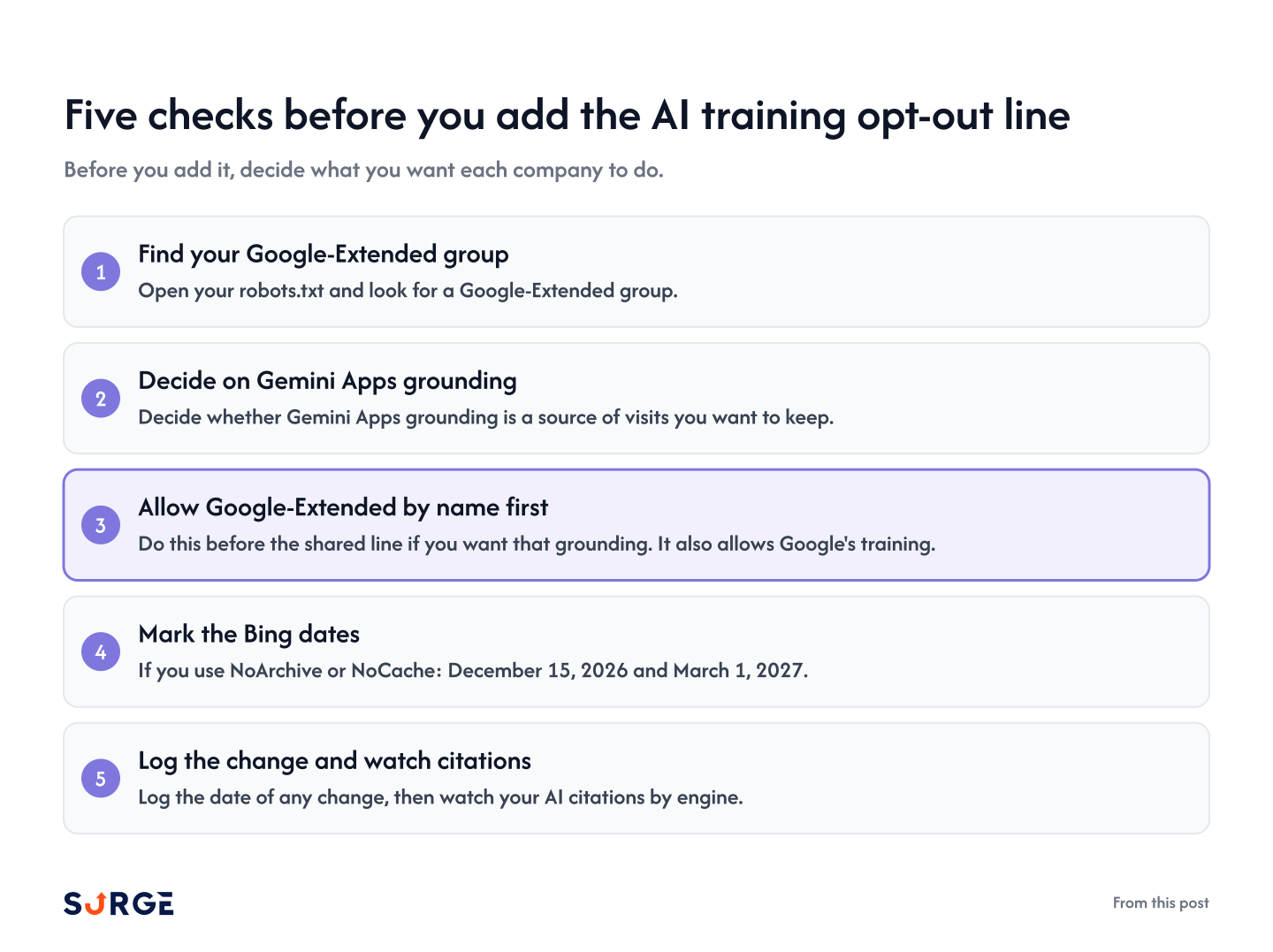
Google plans to treat the line as a Google-Extended block when your file doesn't name Google-Extended, and Gemini Apps grounding could go with it.
Bing keeps training and grounding apart, so its robots.txt line covers training only.
OpenAI's current bot rules keep working alongside the shared line.
What Google, Microsoft and OpenAI Announced on October 30
All three back the same line, on different timelines:
Company
What it said
When
Google
Plans to read the line "as if the publisher had disallowed Google-Extended" when Google-Extended is not named
"in 2027"
Microsoft (Bing)
Reads the line as a training preference; grounding is a separate, page-level setting
From February 1, 2027
OpenAI
"OpenAI will honor a common signal in robots.txt"
"in the coming months"
Your current bot rules still apply. OpenAI says the line "will not replace the controls we already provide through robots.txt."
Bing's announcement is the only one of the three posts that spells out the line:
Bing's announcement of October 30, 2026, captured November 2, 2026. Image credits to Microsoft Bing.
AI Training Opt-Out in robots.txt: What It Means for You
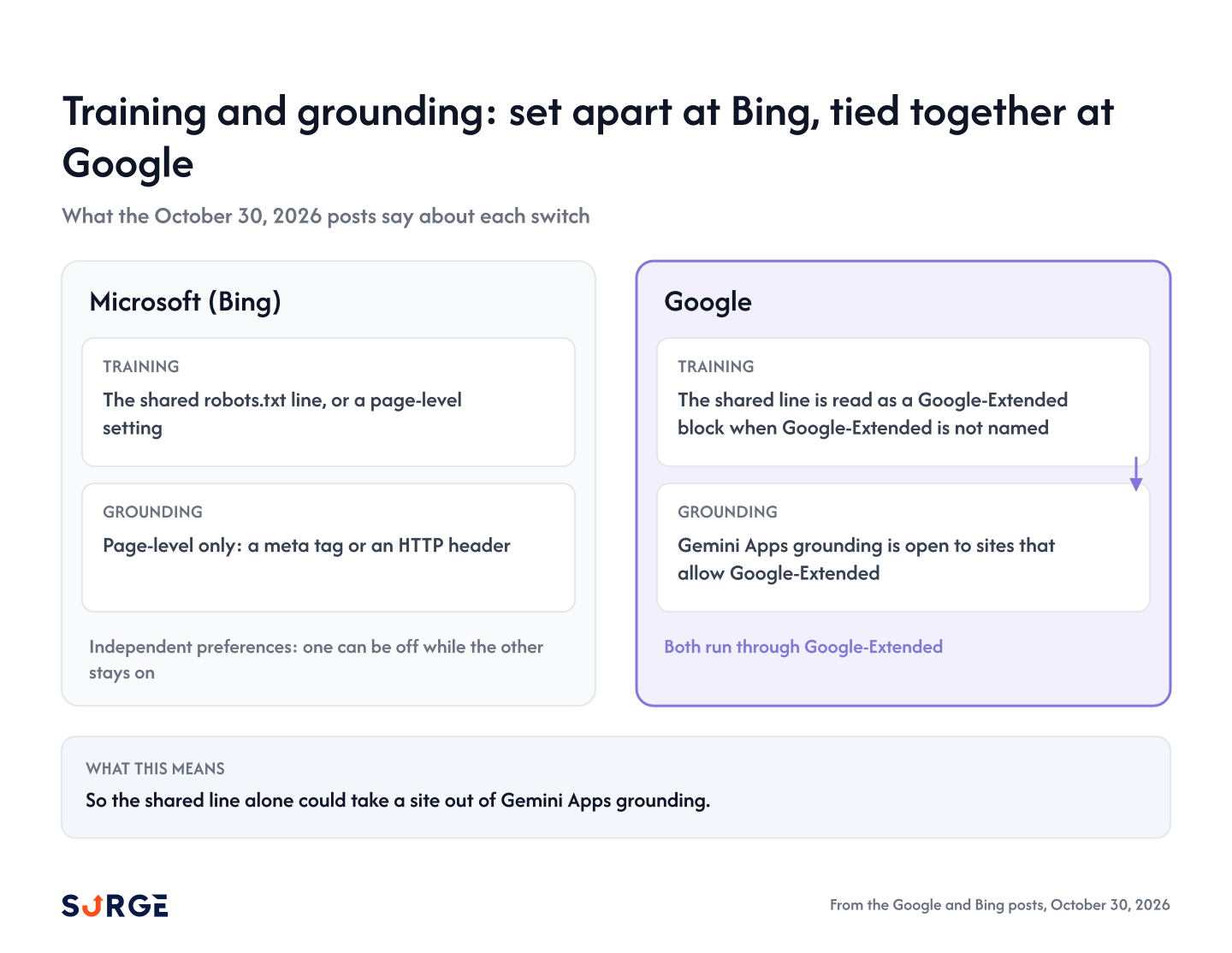
Training shapes a future model. Grounding is when an AI answer pulls in your page to respond right now.
Bing keeps the two apart: "Training and grounding are independent preferences." Its robots.txt line covers training only.
Grounding at Bing is a page-level choice, set with a meta tag or an HTTP header. Bing warns that opting out of grounding "will significantly reduce your content's visibility in AI-generated experiences."
Google ties the two together. It says "websites that specifically allow Google-Extended are eligible to appear in responses and receive clicks via grounding in Gemini Apps."
So the shared line alone could take a site out of Gemini Apps grounding. Google's post doesn't describe a way to block its training while keeping that grounding.
Many sites would get that default reading: in a sample project, 43 of 59 readable robots.txt files from sites cited by ChatGPT and Google AI Overviews never name Google-Extended, and 0 use the shared line yet. That is one project and one check on November 2, so it shows reach, not lost citations.
The two switches work differently at each company:
Get Your Clients Cited Where Competitors Already Are
Published 2026-11-09. We'll update this post if Google, Microsoft or OpenAI change their guidance.
Frequently Asked Questions
What is the __usage_ai-training token?
It is a shared name for AI training use that goes in the User-Agent line of robots.txt. Google calls it a shared "policy token".
Can you set the AI training preference for one page?
At Bing, yes. An ai-training:disallow value in a Bingbot meta tag or X-Robots-Tag header overrides the robots.txt line for that page.
Does the AI training opt-out affect Bing search results?
No. Bing says these usage preferences "do not change eligibility for traditional Bing search results."
Who created the shared AI training signal?
It comes from the AI Preferences working group at the Internet Engineering Task Force (IETF). Google calls it a "draft proposal," and Bing says work toward a final standard continues.
Does the shared line stop AI bots from crawling a site?
No. Bing says these settings "govern use of content, not crawl access."
NOTE:
This article was written by SurgeGraph's AI writer using a custom Author Synthesis voice profile, then reviewed by a human editor. Author Synthesis learns a brand's voice from real writing samples so generated content matches its tone, cadence, and phrasing.
Eli Taylor
Digital Marketer at SurgeGraph
Eli lives and breathes digital marketing and AI. He always seeks new ways to combine AI with marketing strategies for more effective and efficient campaign executions. When he’s not tinkering with AI tools, Eli spends his free time playing games on his computer.